

Case Study : Dust Accumulation & Maintenance Challenges in Synthetic Thatch Roofing
Introduction :
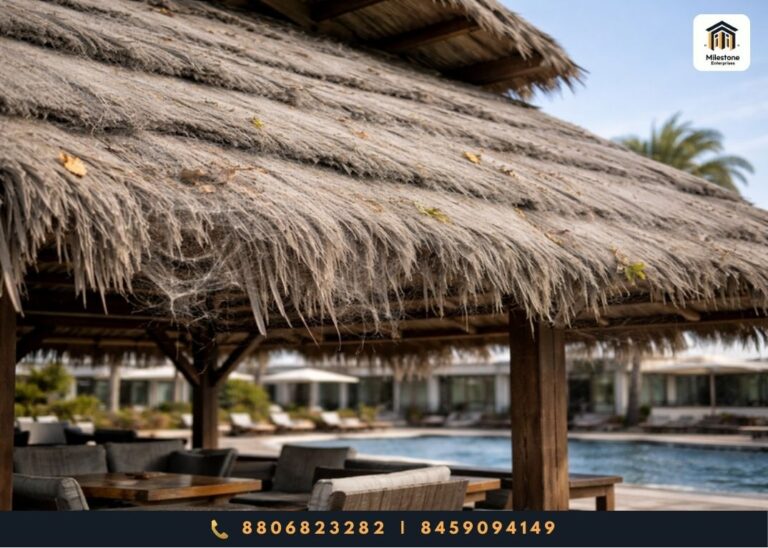
Synthetic thatch roofing is widely used in hospitality and leisure spaces such as resorts, outdoor restaurants, and lounges to create a natural, tropical aesthetic while offering greater durability than traditional materials. It is designed to withstand varying weather conditions and requires less structural upkeep over time. However, despite these advantages, it can present operational challenges if not properly managed. Dust accumulation within its layered structure, along with trapped debris, can affect both appearance and hygiene. Additionally, the uneven and dense profile of synthetic thatch can make regular cleaning and maintenance more complex. In high-traffic hospitality environments, these issues may lead to increased maintenance efforts, higher costs, and a decline in overall customer experience. Therefore, a systematic approach to design, installation, and routine maintenance is essential to ensure long-term performance and cleanliness.
Project Overview :
• Type of System: Synthetic thatch roofing system (modular panel installation)
The project involved installing a synthetic thatch roofing system for a premium outdoor restaurant and lounge, selected for its natural appearance, durability, and ease of installation.
• Location: Open-air hospitality environment
The roofing system was installed in an outdoor hospitality setting exposed to environmental factors such as dust, wind, and weather variations, while maintaining a resort-style ambiance.
• Area Covered: Outdoor dining and lounge spaces
The installation covered key functional zones including seating areas, dining sections, and relaxation spaces requiring aesthetic yet durable roofing.
• Purpose: Resort-style aesthetics with low maintenance
The primary objective was to create a visually appealing tropical environment while ensuring long-term durability and minimizing maintenance requirements.
Problem Identified :
A. Dust & Debris
Synthetic thatch roofing tends to trap dust, leaves, and airborne particles within its layered, fiber-like structure. Over time, this buildup becomes visible on the surface, making the roof look dull and unclean. Since the debris gets lodged deep inside rather than staying on top, it is difficult to remove with basic cleaning, leading to recurring accumulation and affecting both aesthetics and hygiene.
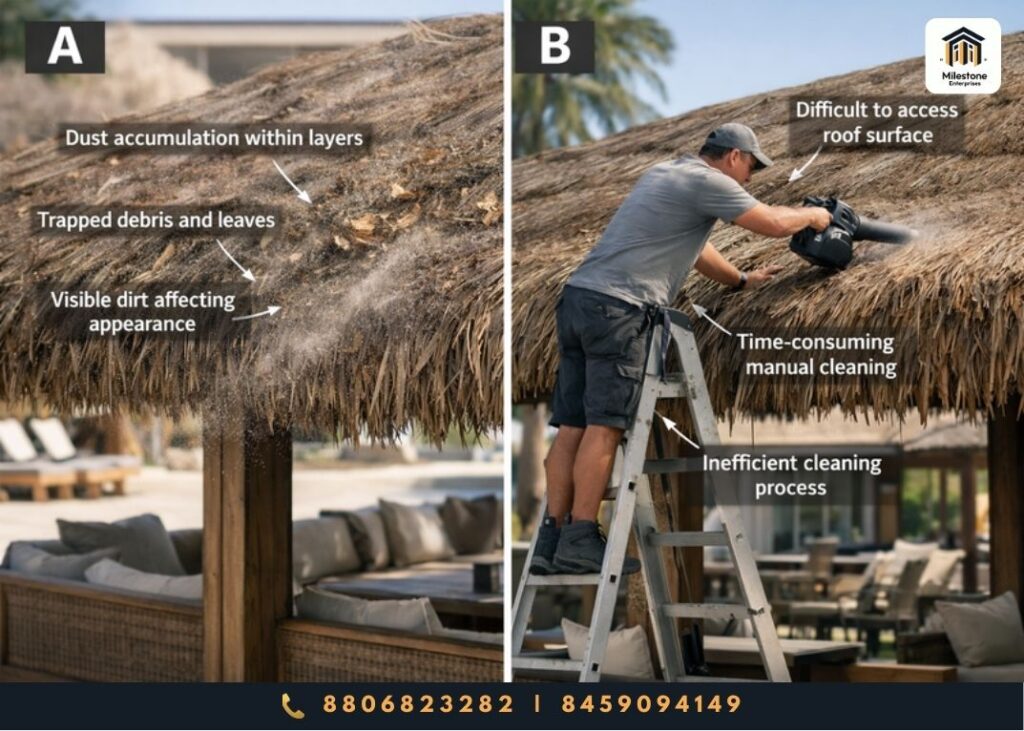
B. Maintenance Issues
Maintaining synthetic thatch roofing is challenging due to its height, slope, and layered design. Accessing the surface requires effort and safety precautions, while cleaning remains time-consuming and inefficient. Conventional methods fail to remove trapped debris completely, resulting in frequent maintenance cycles and increased labor without achieving long-lasting results.
Key Causes :
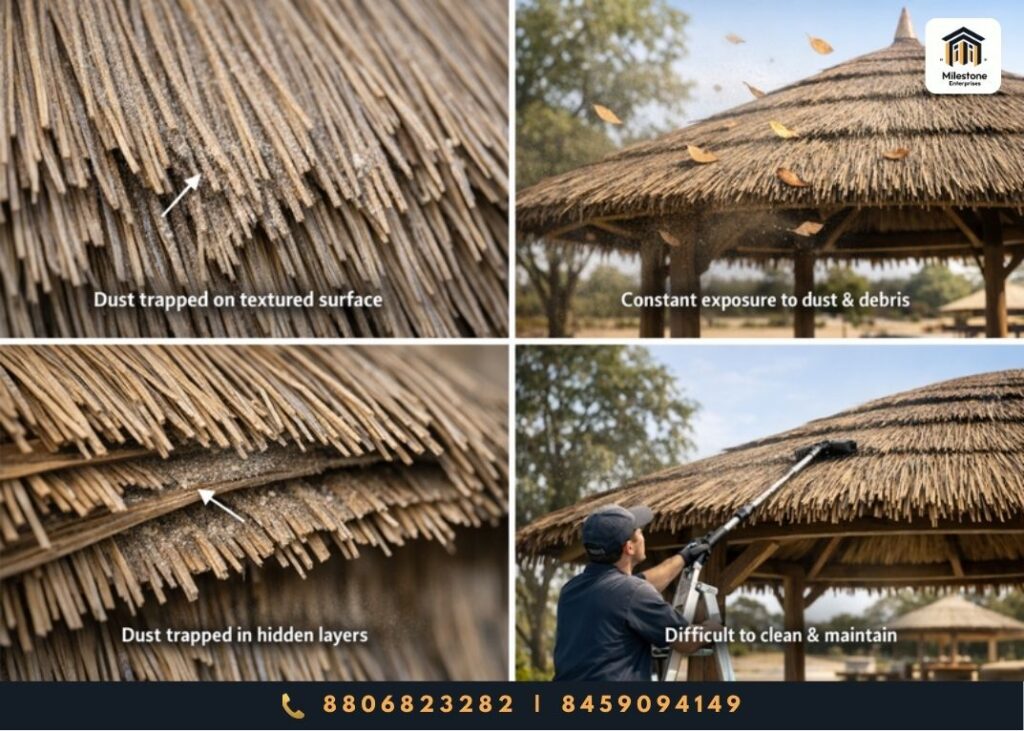
1. Material Texture: The fiber-like surface of the material easily traps fine dust and airborne particles. Over time, this leads to visible dirt buildup that is difficult to remove through regular cleaning.
2. Environmental Exposure: Being installed in open surroundings, the roof is constantly exposed to dust, leaves, and other debris. This continuous inflow accelerates accumulation and affects overall cleanliness.
3. Design Complexity: The layered construction creates small gaps and hidden pockets where dirt and debris settle. These areas are not easily visible, allowing accumulation to go unnoticed for long periods.
4. Accessibility Constraints: The height and sloped structure of the roof make it difficult to access for cleaning. This results in irregular maintenance and reduces the effectiveness of cleaning efforts.
Impact of the Problem :

1. Aesthetic Degradation: Visible dust accumulation significantly reduced the overall visual appeal of the space, making it look dull, unclean, and poorly maintained, which directly affected the intended ambiance.
2. Customer Experience Issues: Occasional dust fall created discomfort for guests, leading to a less pleasant experience and reducing overall customer satisfaction in the space.
3. Operational Inefficiency: Frequent and unplanned cleaning activities disrupted daily operations, affecting service flow, staff efficiency, and overall management of the space.
4. Increased Costs: Continuous cleaning and maintenance requirements increased dependency on manpower, resulting in higher operational costs and resource utilization over time.
Solution Implemented :
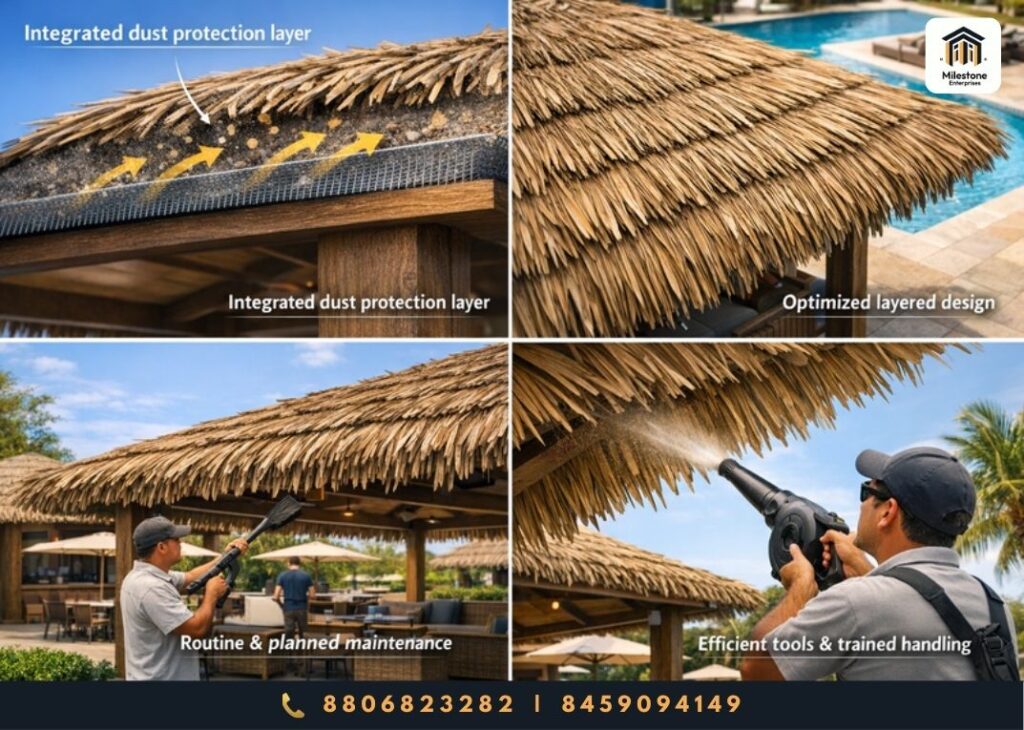
1. Integrated Dust Control Layer:
Introduce a concealed protective mesh or underlayer system to prevent dust penetration while maintaining the natural aesthetic of the roofing.
2. Design Refinement:
Modify installation detailing to reduce gaps and layered pockets, minimizing areas where dust and debris can accumulate.
3. Structured Maintenance Protocol:
Implement a fixed cleaning schedule combining routine light cleaning with periodic deep cleaning to ensure consistent upkeep.
4. Efficient Cleaning Methods & Training:
Adopt non-damaging tools like air blowers and train staff in proper techniques to improve cleaning efficiency and extend material life.
Results Achieved :

1. Reduced Dust Accumulation:
Implementation of preventive measures significantly minimized dust buildup, resulting in a cleaner and more manageable roofing surface.
2. Improved Hygiene Standards:
Regular maintenance and better design control enhanced overall cleanliness, ensuring a more hygienic environment.
3. Enhanced Customer Experience:
Cleaner surroundings and reduced dust disturbances improved guest comfort and satisfaction levels.
4. Lower Maintenance Costs:
Efficient processes and planned maintenance reduced excessive labor and long-term operational expenses.
Conclusion :
Synthetic thatch roofing is an effective solution for achieving premium tropical aesthetics in hospitality and outdoor spaces, but challenges like dust accumulation, hidden debris pockets, and difficult maintenance can impact its performance if not managed properly. These issues may affect cleanliness, increase maintenance efforts, and reduce overall user experience over time. By improving design detailing, adding preventive measures such as protective layers, and following a structured maintenance plan, these challenges can be effectively controlled. With the right approach, synthetic thatch roofing can maintain its visual appeal, ensure durability, and deliver a consistent, high-quality experience.