

Case Study : Water Ponding and Structural Stress in Tensile Roofing Structures
Introduction :
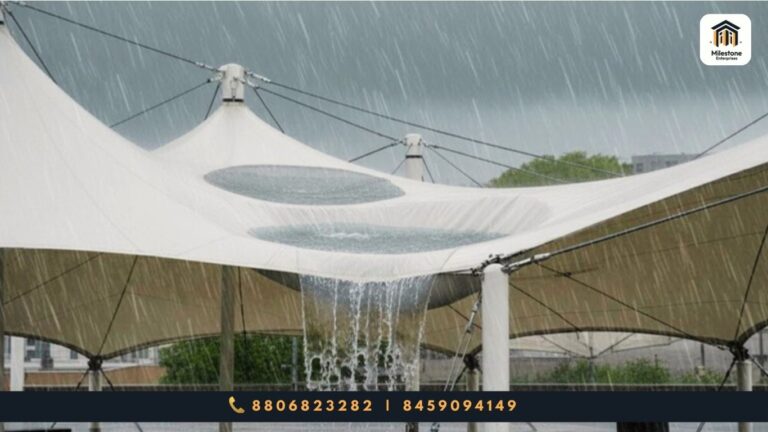
Tensile roofing structures are valued for their lightweight design, architectural elegance, and ability to cover large spans efficiently. However, their long-term performance depends heavily on precise form-finding, correct geometry, and uniform membrane tension. Even small design miscalculations can lead to serious functional issues such as water ponding and increased structural stress. This case study examines a tensile roofing structure that experienced performance failures during monsoon conditions due to poor design execution and explains how an engineering-led redesign successfully eliminated these issues, restoring durability, safety, and intended architectural performance.
Project Overview :
- Type of System: Tensile roofing structure
A lightweight tensile membrane system designed for large-span weather protection. - Location: Public-use open area
Installed over an open/semi-open space exposed to monsoon conditions. - Area Covered: Open-span roofing
Large-span coverage without intermediate supports. - Purpose: Drainage efficiency and durability
To ensure proper water flow, reduce structural stress, and deliver long-term, weather-resistant performance.
Problem Identified :
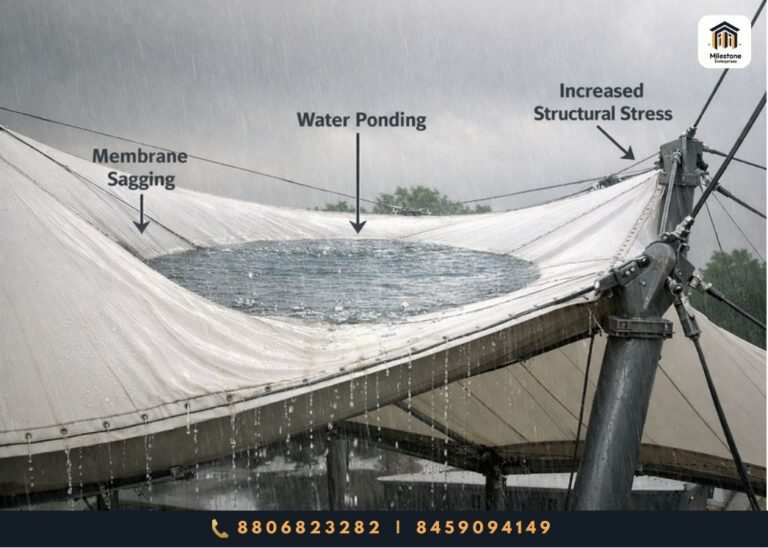
1. Water ponding on the membrane
Rainwater accumulated at multiple low points due to insufficient slope and improper tensile geometry, and the absence of natural drainage paths prevented water from flowing off the membrane surface.
2. Membrane sagging and deformation
Continuous water accumulation caused visible sagging of the tensile fabric, reducing membrane tension and increasing stress on both the fabric and the supporting steel members.
3. Increased structural stress and safety risk
The additional water load led to uneven load distribution across the structure, significantly increasing the risk of fabric damage, seam failure, and reduced structural reliability during periods of heavy rainfall.
Key Causes :
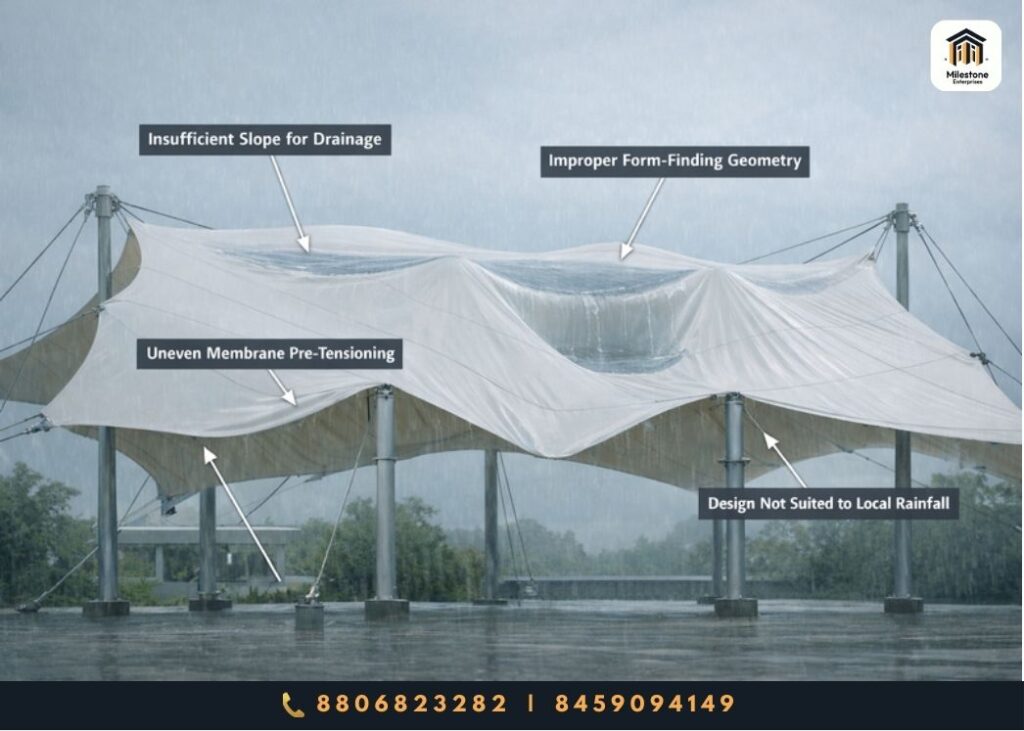
1. Insufficient Slope for Drainage
The membrane slope was too low to allow gravity-driven water runoff. As a result, rainwater remained stagnant instead of draining naturally.
2. Improper Form-Finding Geometry
Incorrect tensile shaping created unintended low points on the membrane. These low areas acted as collection zones for rainwater.
3. Uneven Membrane Pre-Tensioning
Non-uniform tensioning reduced overall membrane stiffness. This caused localized sagging when the fabric was subjected to rain load.
4. Design Not Suited to Local Rainfall
The structure was not designed for high monsoon rainfall intensity. Drainage capacity and membrane behavior were inadequate for local conditions.
Impact of the Problem :
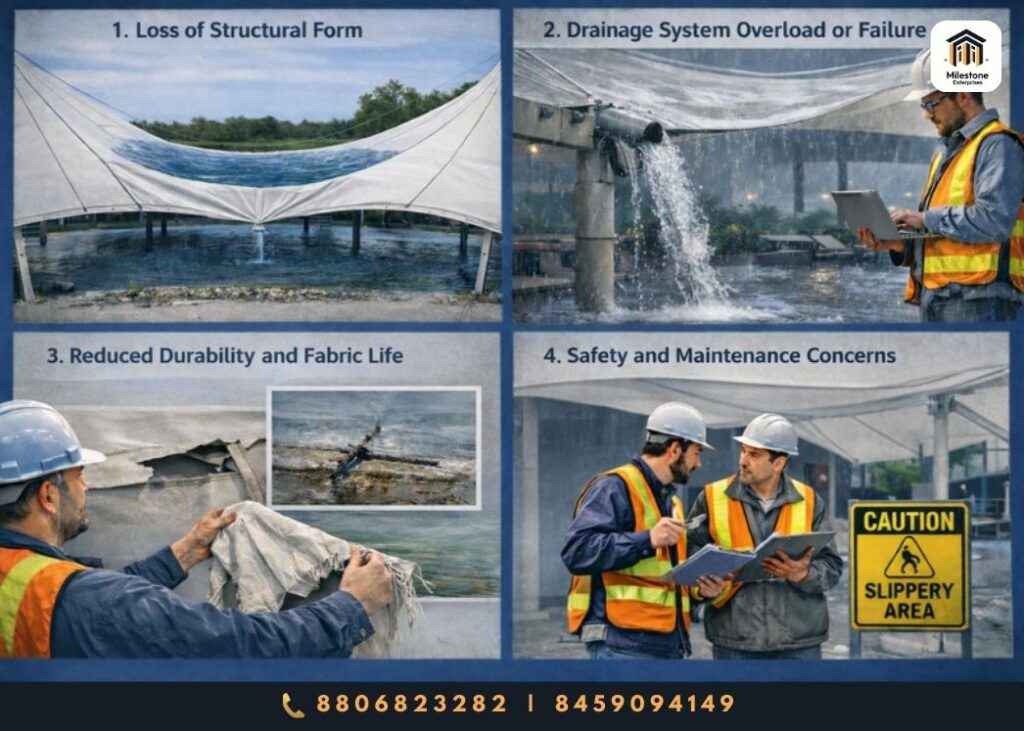
- Loss of Structural Form
Water ponding caused visible sagging, distorting the intended geometry and affecting aesthetics and performance. - Drainage System Overload or Failure
Excess water overwhelmed drainage paths, leading to overflow and secondary ponding areas. - Reduced Durability and Fabric Life
Prolonged water retention increased material fatigue, accelerating deformation and fabric deterioration. - Safety and Maintenance Concerns
Repeated ponding raised safety risks and increased the need for frequent inspection and maintenance.
Solution Implemented :
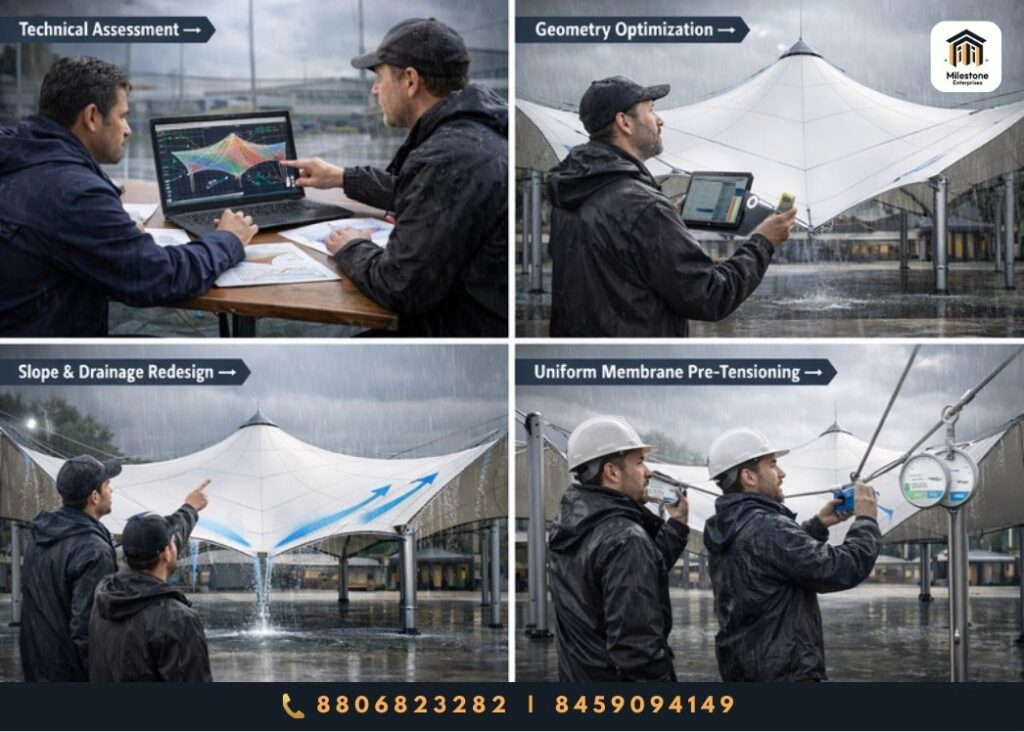
- Technical Assessment
Identified the root causes of water ponding and uneven structural stress through detailed analysis. Geometry Optimization
Reshaped the tensile form to ensure natural water flow and structural stability.Slope & Drainage Redesign
Redefined high and low points to eliminate flat zones and prevent water accumulation.Uniform Membrane Pre-Tensioning
Balanced membrane tension to avoid sagging and localized stress concentration.
Results Achieved :
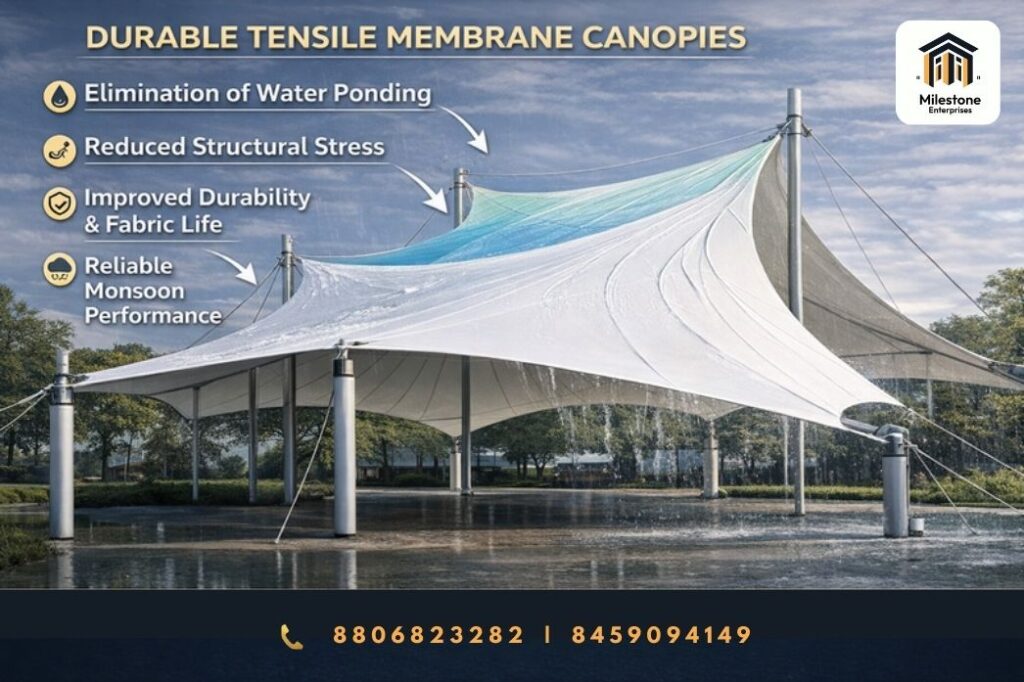
- Elimination of Water Ponding
Redesigned geometry ensured continuous drainage, completely preventing water accumulation. Reduced Structural Stress
Removal of stagnant water loads significantly lowered stress on the membrane and steel members.Improved Durability & Fabric Life
Optimized tensioning and detailing minimized material fatigue and long-term deformation.Reliable Monsoon Performance
The structure now performs safely and efficiently under heavy rainfall conditions.
Conclusion :
Water ponding in tensile roofing structures is most often the result of design and engineering shortcomings rather than material failure. Inadequate form-finding, insufficient slope, and uneven membrane tension can lead to water accumulation, increased structural stress, and reduced service life of the fabric. When a tensile system is properly engineered with optimized geometry, correct high–low points, uniform pre-tensioning, and fabric selection suited to site conditions, it performs reliably even under heavy rainfall. This case study reinforces that an engineering-led, design-first approach is essential to ensure effective drainage, structural safety, long-term durability, and the intended lightweight architectural performance of tensile roofing systems.