

Case Study : Cracking and Dampness Issues in Drywall Systems
Introduction :
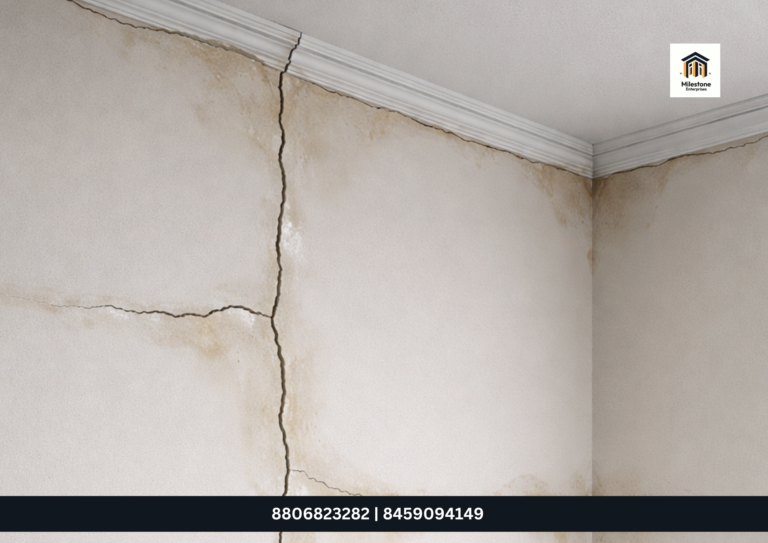
This case study highlights cracking and dampness issues observed in a drywall system that developed due to improper installation practices. Within a short period of time, visible cracks, moisture penetration, and surface deterioration began to appear, resulting in a poor finish and reduced overall performance of the system. These issues not only affected the aesthetic quality of the space but also compromised the durability and reliability of the installation. The study focuses on identifying the root causes of these failures, including incorrect material handling, inadequate joint treatment, and lack of proper surface preparation. By analyzing these factors, the case study emphasizes the importance of following correct installation procedures to ensure long-lasting, moisture-resistant, and crack-free drywall systems.
Project Overview :
Type of System: Drywall partition system
The project involved a drywall partition system used for creating internal walls, selected for its flexibility, clean finish, and efficient space utilization.
Location: Residential / Commercial structure
The drywall system was installed within a residential or commercial property to divide spaces effectively while maintaining aesthetics.
Area Covered: Internal wall partitions
The installation covered internal areas such as offices, rooms, corridors, or functional zones requiring lightweight yet durable partitions.
Purpose: Smooth finish, durability, and moisture resistance
The primary objective was to achieve a smooth, crack-free wall finish while ensuring long-term durability and protection against dampness and moisture-related issues.
Problem Identified :
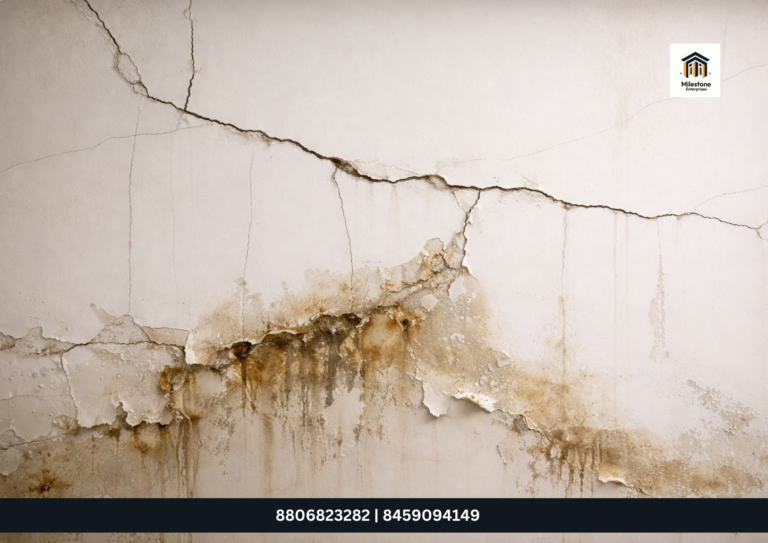
1. Cracks at panel joints
Cracks developed at the panel joints within six months of installation. These cracks occurred due to improper joint treatment and incorrect installation practices, leading to visible joint lines and structural weakness in the drywall system.
2. Damp patches near joints
Moisture penetration was observed near the joint areas, resulting in damp patches on the wall surfaces. The absence of proper sealing and use of low-quality materials allowed moisture to seep in, causing surface staining and deterioration over time.
3. Deterioration of wall finish quality
The combined effect of cracking and dampness led to a significant reduction in overall wall finish quality. The walls lost their smooth appearance, required frequent maintenance, and failed to meet the expected performance and aesthetic standards.
Impact of the Problem :
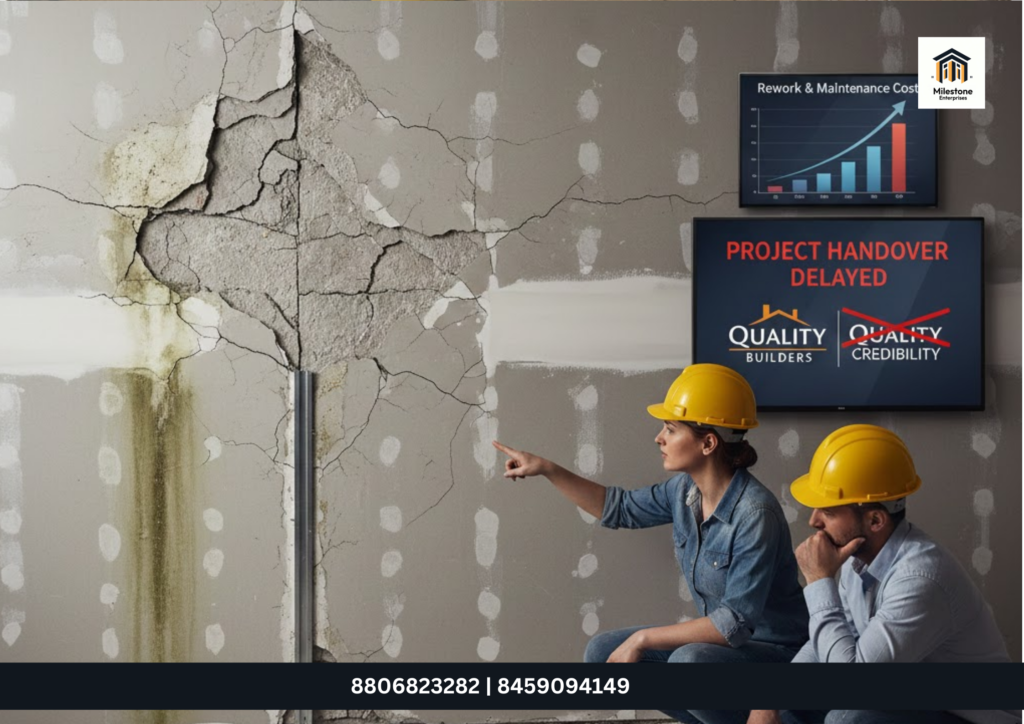
- Client dissatisfaction
Cracks and damp patches spoiled the wall finish, failing to meet the client’s quality expectations. Higher rework and maintenance cost
Repeated repairs increased maintenance efforts and long-term project costs.Project handover delay
Extra repair work extended timelines and delayed final handover.Reduced project credibility
Ongoing defects lowered confidence in workmanship and installation quality.
Solution Implemented :
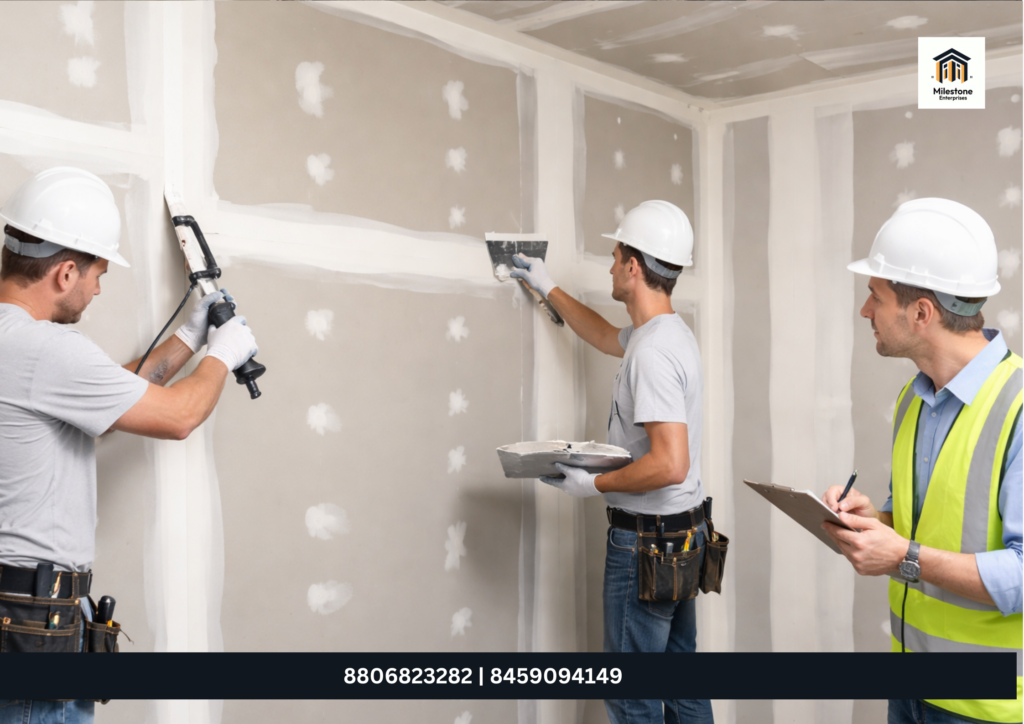
- Proper joint treatment
Standard jointing methods were used to ensure strong bonding and a smooth, durable finish. Water-resistant sealants applied
High-quality sealants were used at joints and critical areas to prevent moisture and dampness.Skilled installation team
Trained and experienced installers carried out the corrective work to ensure quality execution.Strict supervision and inspection
Regular supervision and stage-wise quality checks ensured all work met required standards.
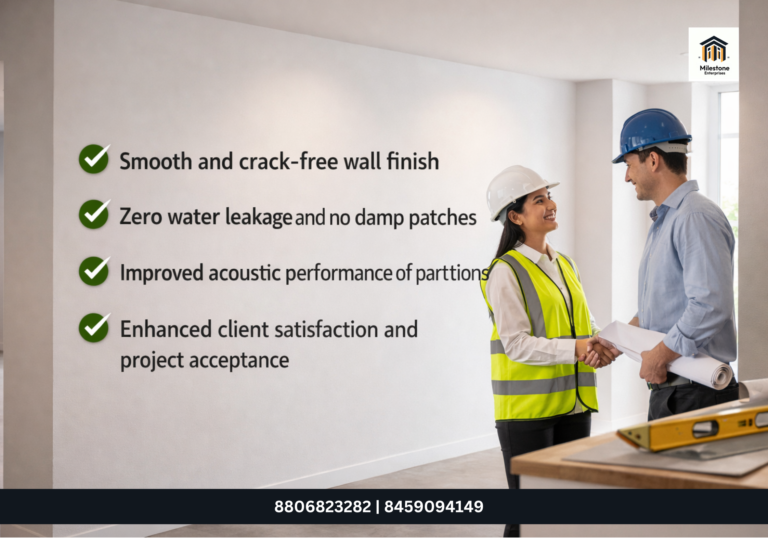
Results Achieved :
Conclusion :
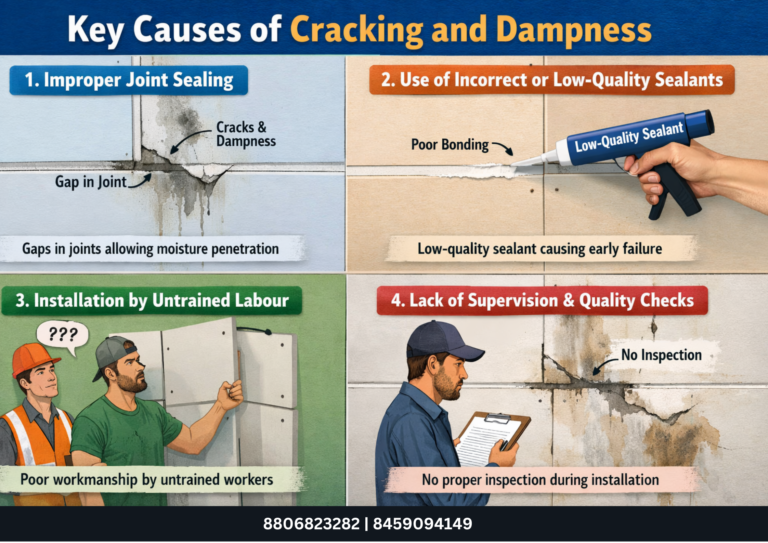
Drywall cracking and dampness issues are most often the result of improper installation practices rather than defects in the material itself. Problems such as poor joint treatment, low-quality sealants, untrained workmanship, and lack of supervision allow cracks and moisture to develop within a short time. When drywall systems are installed using correct jointing methods, high-quality water-resistant materials, and skilled labour under proper supervision, they deliver long-lasting performance. With the right installation practices and regular quality checks, drywall systems provide a smooth, durable, crack-free, and moisture-resistant solution for both residential and commercial spaces.