

Case Study: Water Leakage Problems in Polycarbonate Roofing Shades
Introduction :
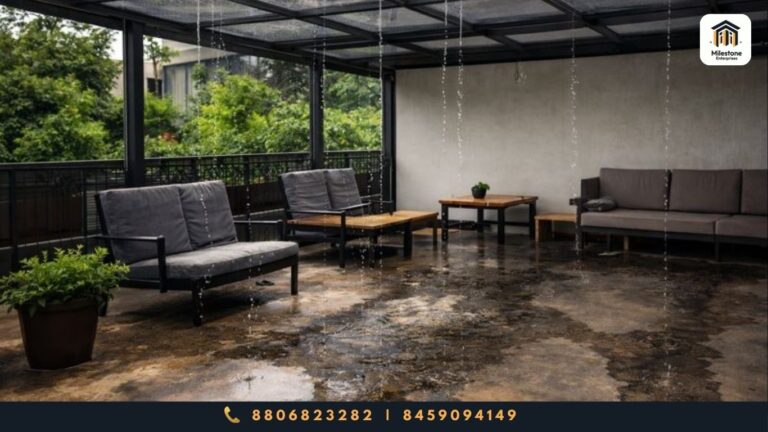
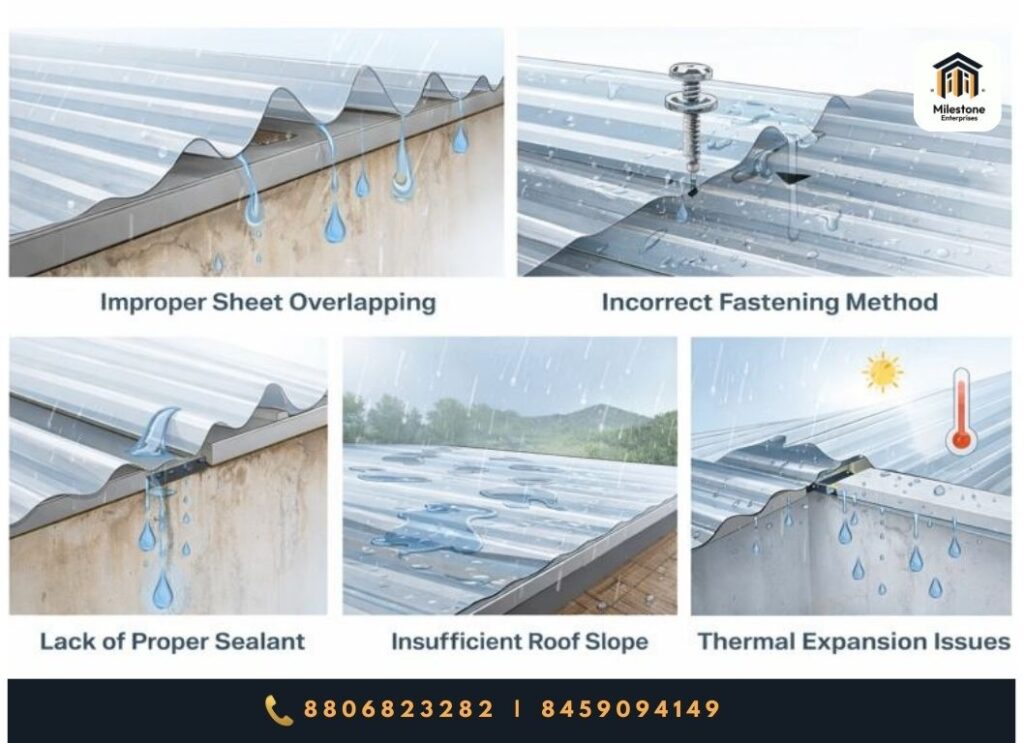
Polycarbonate roofing shades are commonly used for terraces, parking areas, walkways, and other outdoor spaces because of their high durability, weather resistance, and ability to transmit natural light. They provide effective protection from sunlight and rain while maintaining a bright and open environment. However, despite the strength of the material, improper installation practices, incorrect sheet overlaps, poor sealing, or mishandling during installation can lead to water leakage problems. These issues become more noticeable during heavy rainfall and monsoon conditions, affecting the usability of the covered area. This case study examines the common causes of water leakage, the issues observed on site, the corrective solutions implemented, and the preventive measures recommended to ensure long-lasting, leak-free performance of polycarbonate roofing shades.
Project Overview :
- Type of Roofing: Polycarbonate roofing shade
The project involved a polycarbonate roofing shade, selected for its strength, weather resistance, and ability to allow natural light while providing protection. - Location: Residential / Commercial structure
The roofing shade was installed at a residential or commercial property to improve the functionality of the outdoor space. - Area Covered: Outdoor shade structure
The covered area included spaces such as a parking zone, terrace, walkway, or sit-out area designed for daily use. - Purpose: Protection from sunlight and rain
The primary objective was to shield the area from harsh sunlight and monsoon rains, ensuring comfort and usability throughout the year.
Problem Identified :
1. Water dripping from joints
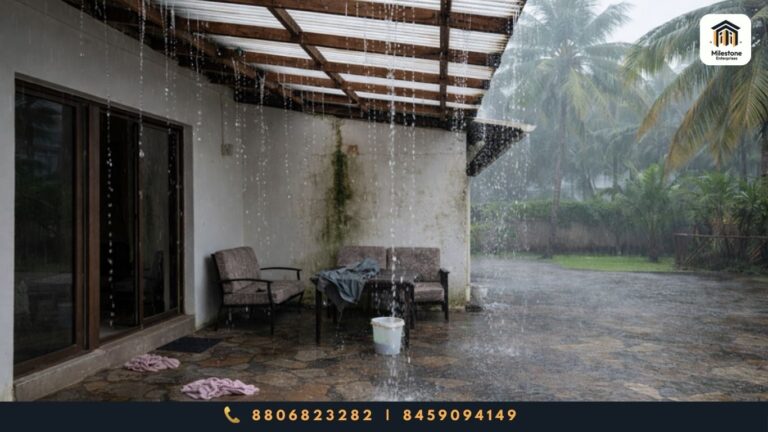
Water leakage was observed at the joints where polycarbonate sheets overlapped and at fixing points. This occurred due to improper sealing, misaligned sheets, or worn-out fasteners, allowing rainwater to enter through the gaps and drip below the shade.
2. Damp patches below the shade
Continuous dripping caused water to collect on the floor and surrounding surfaces, resulting in visible damp patches. Over time, this moisture led to staining, slippery surfaces, and potential damage to the flooring and nearby structures.
3. Reduced usability of the covered area
Due to water leakage and damp conditions, the covered space could not be used effectively during rainfall. Activities such as parking, storage, or movement under the shade were disrupted, reducing the overall purpose of the roofing structure.
Key Causes of Water Leakage :
Impact of the Problem :
1. Continuous water leakage
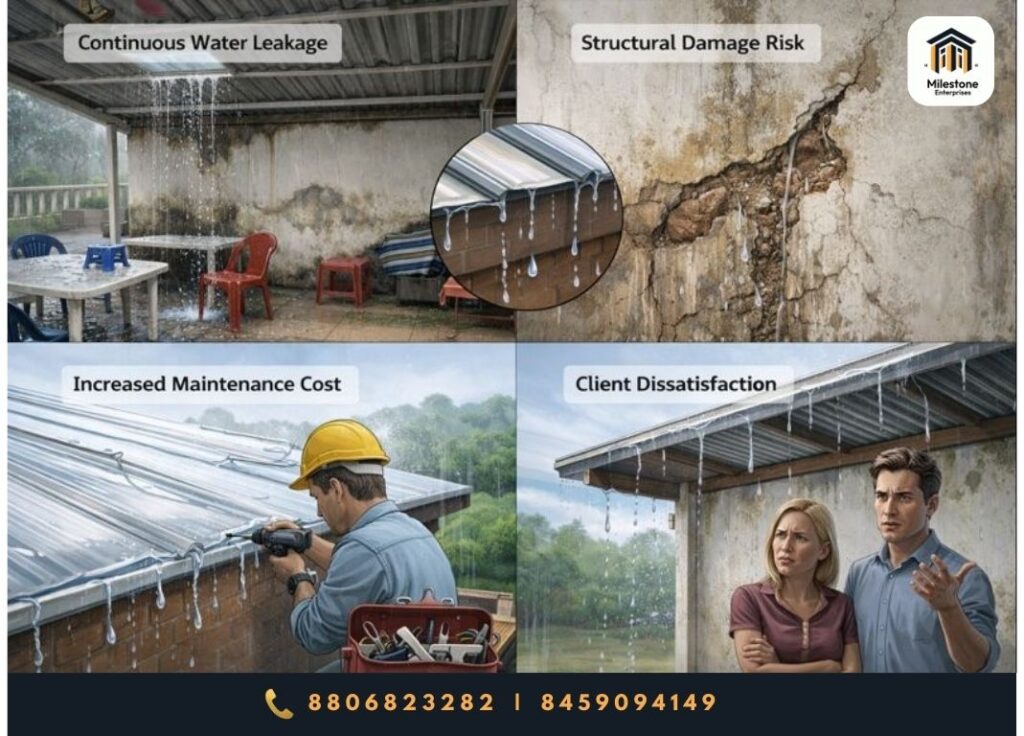
Water seepage occurred during every rainfall, causing constant dripping. This reduced the usability of the covered area and created discomfort.
2. Structural damage risk
Prolonged moisture exposure increased the risk of corrosion in the structure. Over time, this could weaken joints and supports.
3. Increased maintenance cost
Repeated repairs and temporary sealing increased maintenance efforts. This resulted in higher long-term costs for the client.
4. Client dissatisfaction
The recurring leakage issue affected the client’s experience. It reduced confidence in the quality of the roofing installation.
Solution Implemented :
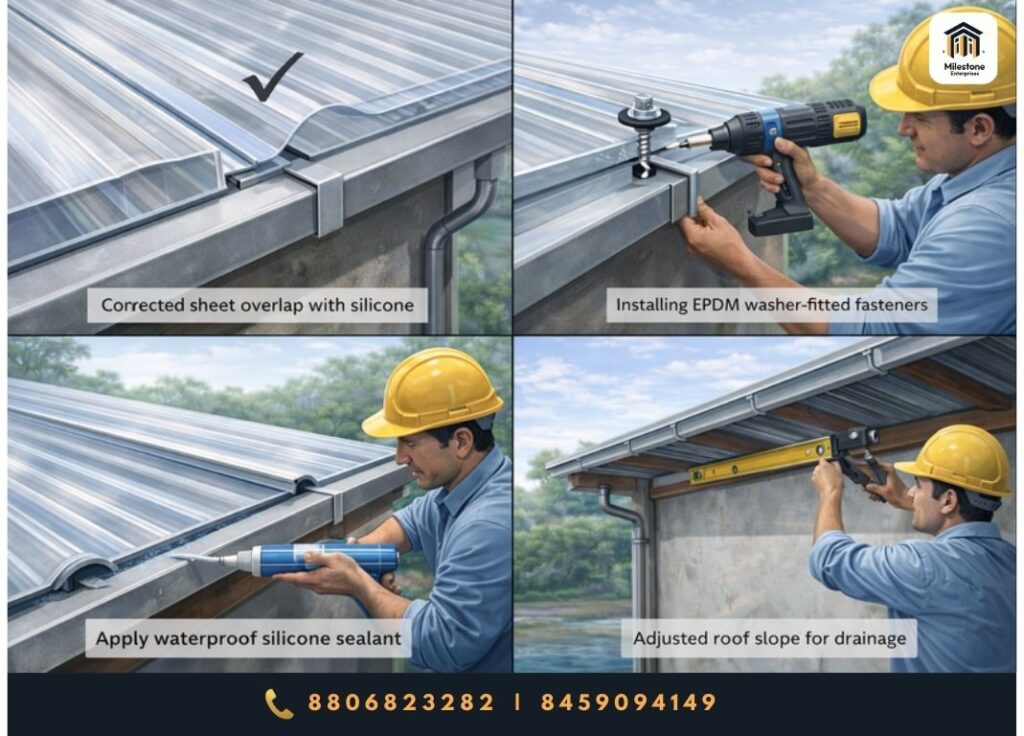
- Corrected sheet overlap
Sheets were aligned with proper overlap to prevent water entry and ensure smooth drainage. Installed EPDM washer-fitted fasteners
Fasteners with rubber washers were used to seal screw holes and stop water seepage.Applied waterproof silicone sealant
Sealant was applied at joints and edges to create an extra barrier against leakage.Adjusted roof slope
The roof angle was corrected to allow effective rainwater flow and avoid water buildup.
Results Achieved :
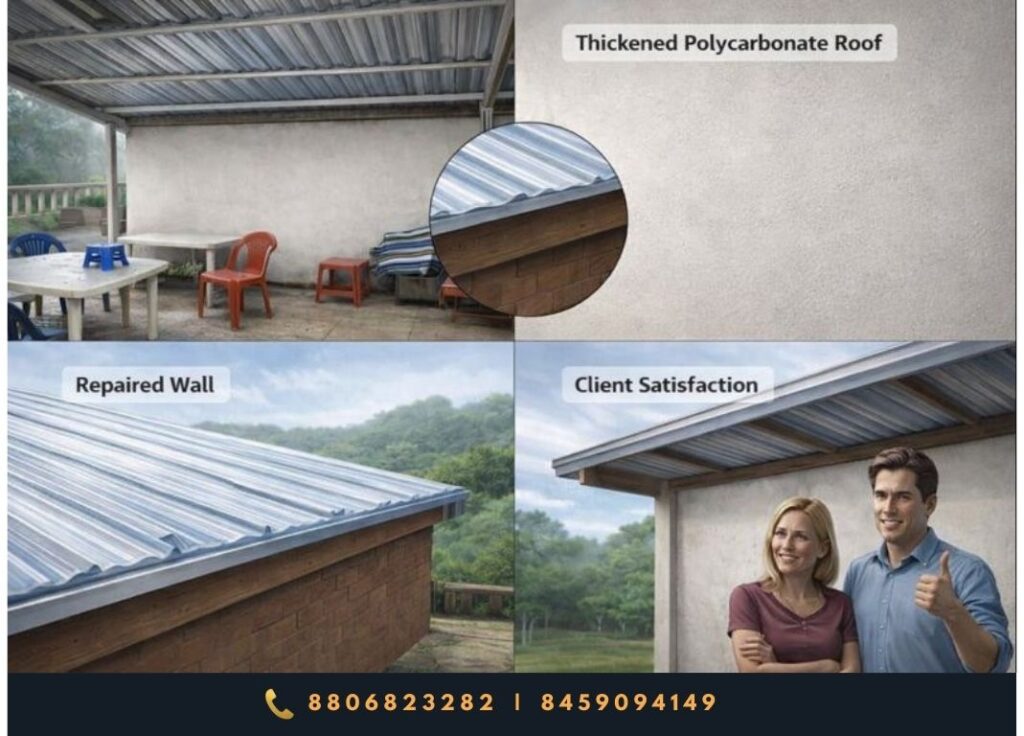
- Leakage completely resolved
After applying corrective measures, water leakage was fully eliminated, making the covered area dry and usable even during heavy rainfall. Improved durability of the roofing shade
Correct installation and quality materials increased the strength and lifespan of the roofing structure.Better rainwater flow
Proper sheet alignment and roof slope ensured smooth drainage without water stagnation.Enhanced client satisfaction
The successful repair restored the client’s confidence and satisfaction with the overall roofing performance.
Conclusion :
Water leakage in polycarbonate roofing shades is most often the result of installation errors rather than defects in the material itself. Issues such as incorrect sheet overlap, improper sealing, wrong fasteners, and insufficient roof slope can allow rainwater to penetrate the structure, especially during heavy rainfall. When the roofing system is designed correctly, installed using proper fixing techniques, and supported with high-quality accessories like EPDM washers and waterproof sealants, polycarbonate roofing shades can perform reliably for many years. With the right installation practices and regular maintenance, they offer a durable, weather-resistant, and completely leak-free solution for both residential and commercial applications.