

✨ What Are Roofing Tiles?
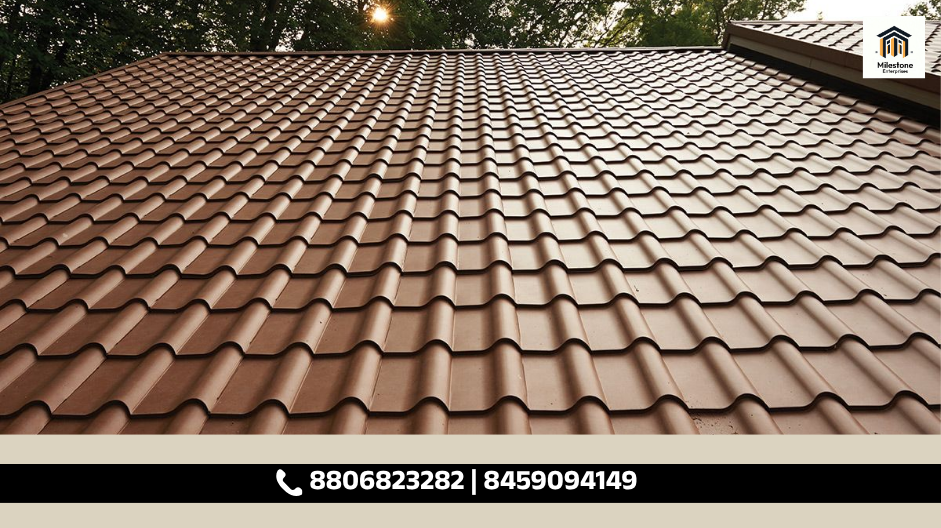
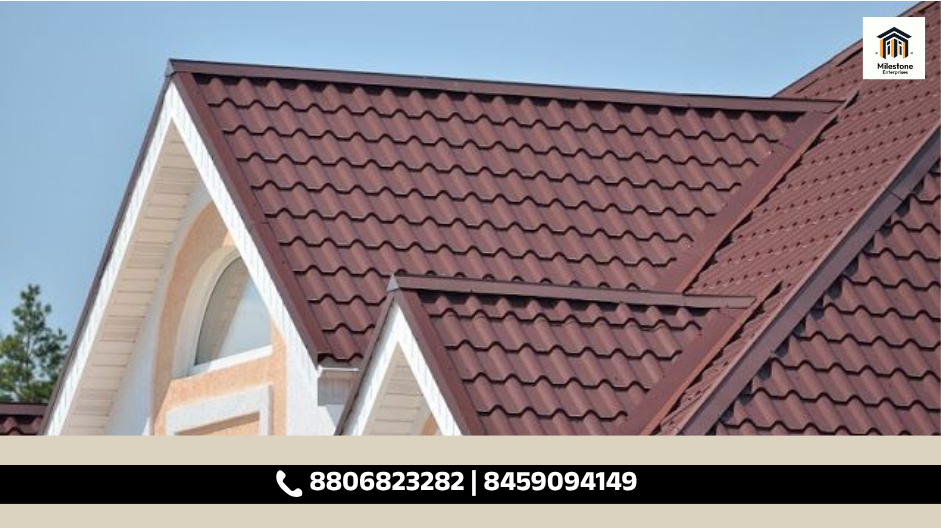
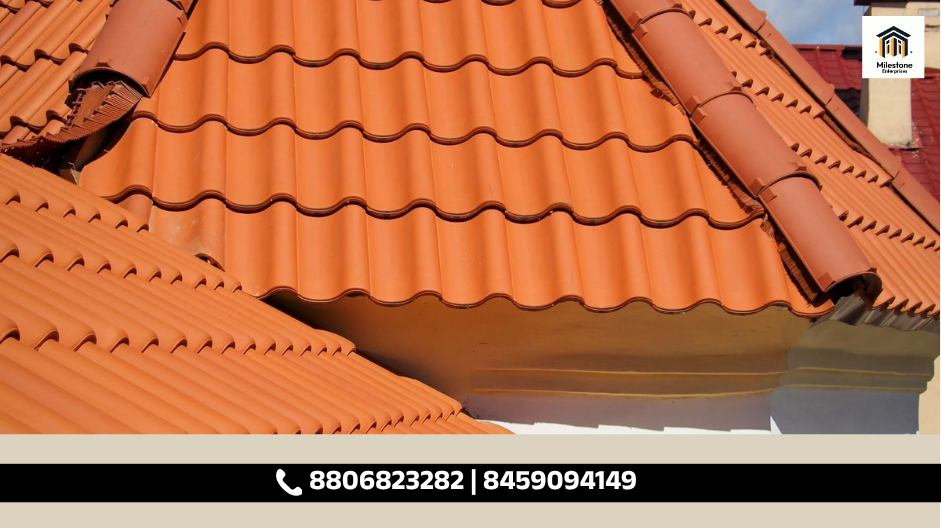
Roofing Tiles are premium ceramic/clay-based roofing tiles designed to give strong protection, long life, and a stylish architectural look. These tiles are commonly used in villas, cottages, resorts, farmhouses, pergolas, and modern homes.
✔ Making / Manufacturing Process
- Raw Material Selection
- High-grade clay, ceramic minerals, and strengthening additives are selected.
- Mixing & Shaping
- Materials are mixed and fed into molds to form the tile shape (German, French, etc.).
- Drying
- Shaped tiles are air-dried or kiln-dried to remove moisture.
- Kiln Firing
- Tiles are fired in a high-temperature kiln (800–1000°C).
- This gives strength, hardness, and weather resistance.
- Glazing / Surface Coating
- Tiles are coated with UV-resistant matte or glossy finish.
- Multiple colours are applied using oxide pigments.
- Quality Testing
- Tiles undergo water absorption, flexural strength, drop test, and dimension check.
- Packing & Dispatch
- Tiles are packed carefully to avoid breakage and transported to site.
✔ Benefits
- Gives a premium, modern architectural look to the roof.
- Helps maintain a comfortable indoor temperature.
- Long-term cost saving due to low maintenance.
- Strong roof performance during rain, heat, humidity and seasonal weather changes.
- Suitable for resorts, villas, cottages, bungalows, farmhouses, and premium homes.
- Multiple colour/texture options to match any design theme.

✔ Advantages
- Leak-proof design – Interlocking edges and water channels prevent water entry even during heavy rainfall.
- High strength & durability – Resistant to cracking, bending, and surface damage.
- Thermal insulation – Air-gap design keeps the building cooler, reducing heat transfer.
- Noise reduction – Tile density helps reduce outside noise like rain, wind, and traffic.
- Lightweight structure – Easier to install and suitable for both metal and wooden trusses.
- UV & weather resistant – Does not fade or get damaged under strong sunlight or harsh climates.
- Fire-resistant – Ceramic/clay composition naturally resists fire.
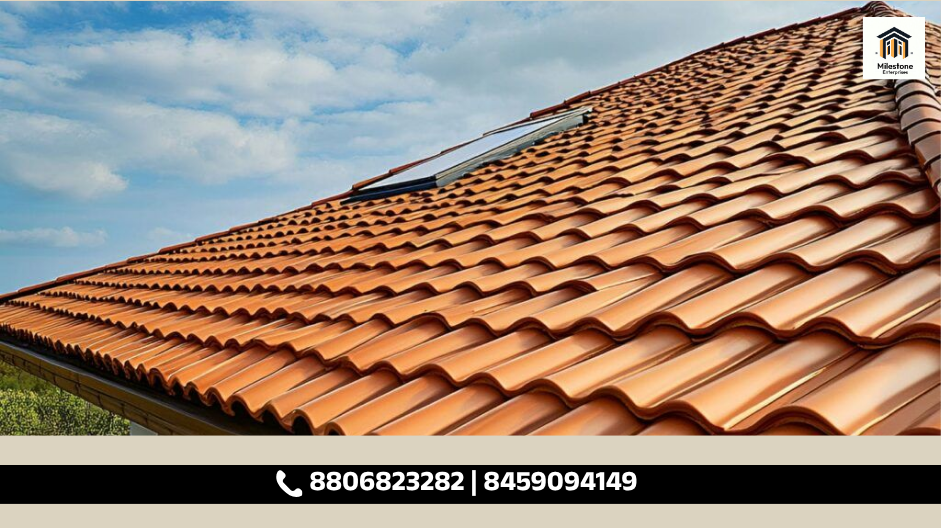
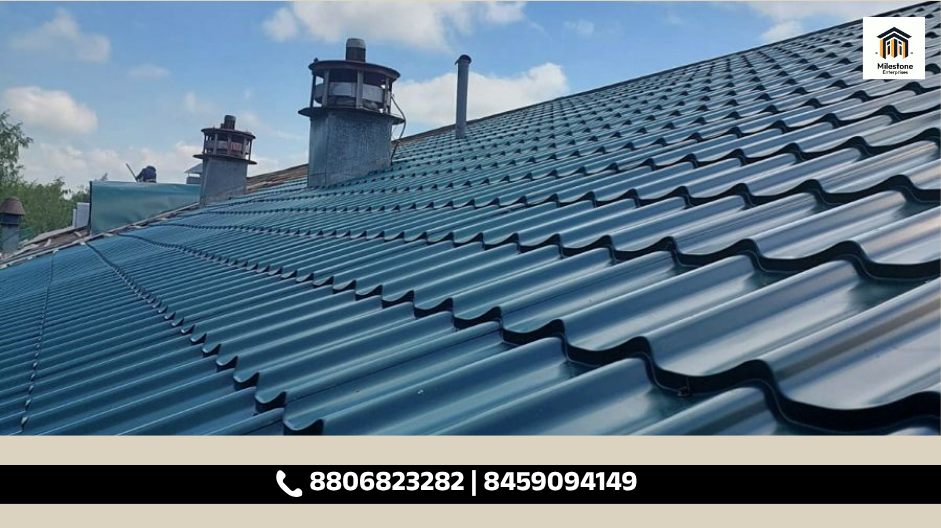
- Aesthetic appeal – Available in multiple colours and styles (German, French, Spanish, Roman, Japanese).
- Low maintenance – No repainting required; only periodic cleaning.
- Eco-friendly material – Made using natural and safe raw materials.
✔ Lifespan
- Average lifespan: 25 to 50 years (depending on climate and maintenance).
- Ceramic/clay tiles generally last longer than metal sheets or asphalt tiles.
- Colour and finish remain intact for many years due to UV-resistant coating.
✔ Warranty
- Typical warranty: 20–25 years
(Actual warranty depends on seller, installation quality, and accessories used.) - Warranty usually covers:
- Structural defects
- Manufacturing cracks
- Color fading for a certain period
✔ Installation Process
- Roof Structure Preparation
- Prepare metal or wooden trusses.
- Maintain correct roof pitch (usually minimum 17°–22° depending on tile model).
- Install waterproof underlayment / membrane.
- Batten Installation
- Horizontal battens are fixed according to tile size and alignment.
- Distance between battens must match manufacturer guidelines.
- Tile Laying
- Start from the bottom edge (eave) and move upwards.
- Lay tiles in straight rows, interlocking each tile properly.
- Use screws or clips where required (wind zones).
- Ridge & Hip Installation
- Install ridge tiles, hip tiles, and caps using proper sealing material.
- Ensure ventilation gaps are maintained.
- Finishing Accessories
- Install eave tiles, valley trays, gutters, weather strips, and wall flashings.
- Perform final alignment and water-testing.