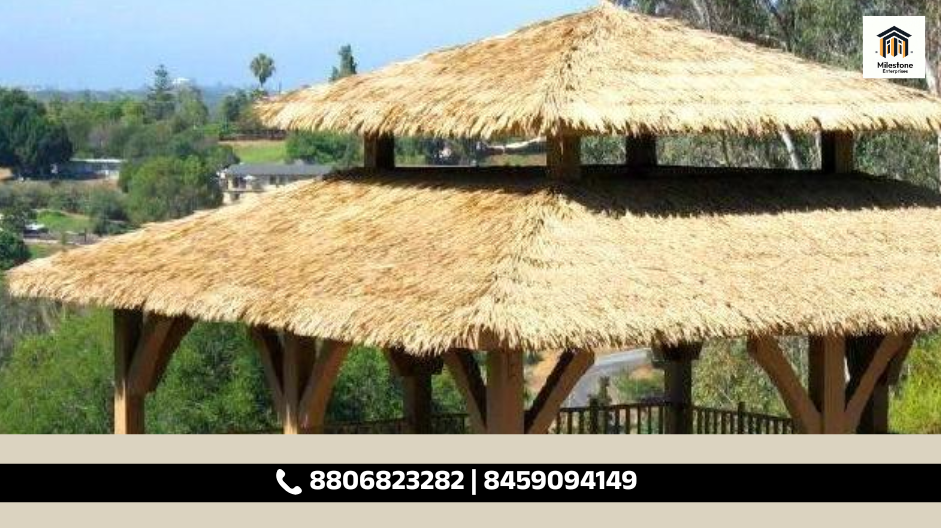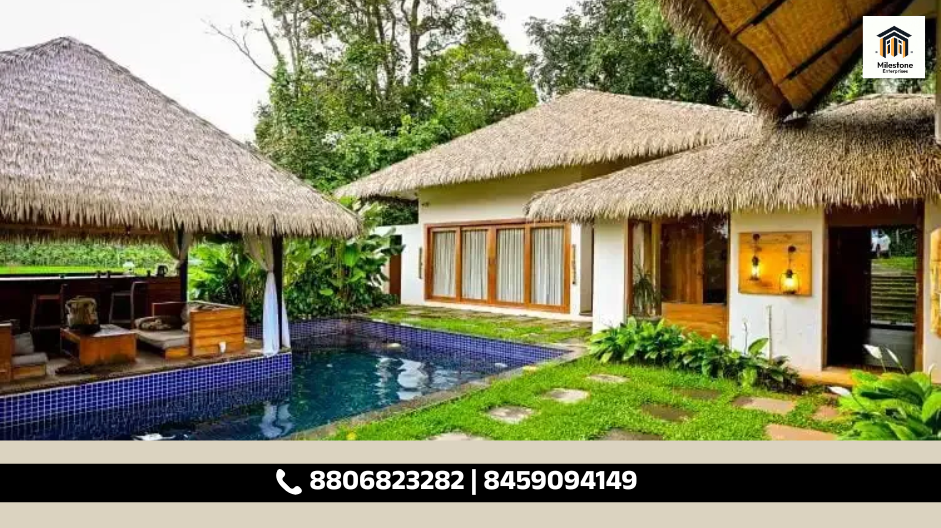


🏗️ What is Synthetic Thatch Roofing?
Synthetic thatch roofing (also known as artificial thatch) is a modern, long-lasting alternative to traditional natural thatch.
Instead of using dried grass or palm leaves, it is made from high-quality synthetic materials such as PVC, HDPE (High-Density Polyethylene), or PE resin that replicate the look and texture of natural thatch — but with superior performance, safety, and lifespan.
This roofing type is widely used in resorts, villas, eco-parks, theme structures, and outdoor pavilions, where designers want the aesthetic appeal of nature with modern durability and zero maintenance.
⚙️ Manufacturing / Making Process
- Material Selection
- Synthetic thatch is made using UV-stabilized, fire-retardant, and recyclable polymers (mainly HDPE or PVC).
- These materials are safe, weatherproof, and designed to mimic the color and texture of real palm leaves or straw.
- Molding & Extrusion
- The polymer material is heated and molded into leaf-like shapes or reed strands using precision molds.
- Some types are hand-shaped or heat-pressed to give a realistic natural effect.
- Coloring & Texturing
- Each piece is colored using UV-resistant pigments, so it does not fade under sun exposure.
- Multiple shades are blended to give a natural gradient look.
- Quality Testing
- Each batch is tested for fire safety, UV resistance, and flexibility before packaging.
🌿 Benefits
🌎 Sustainable Design: Made from recyclable polymers, supports green architecture.
🏡 Versatile Application: Suitable for resorts, cottages, villas, restaurants, and theme parks.
☀️ All-Weather Performance: Withstands rain, heat, snow, and wind.
🎨 Custom Styles: Available in various designs – African reed, Bali palm, Mexican palm, Fiji grass, etc.
🧩 Compatibility: Can be installed on existing natural thatch roofs for renovation.
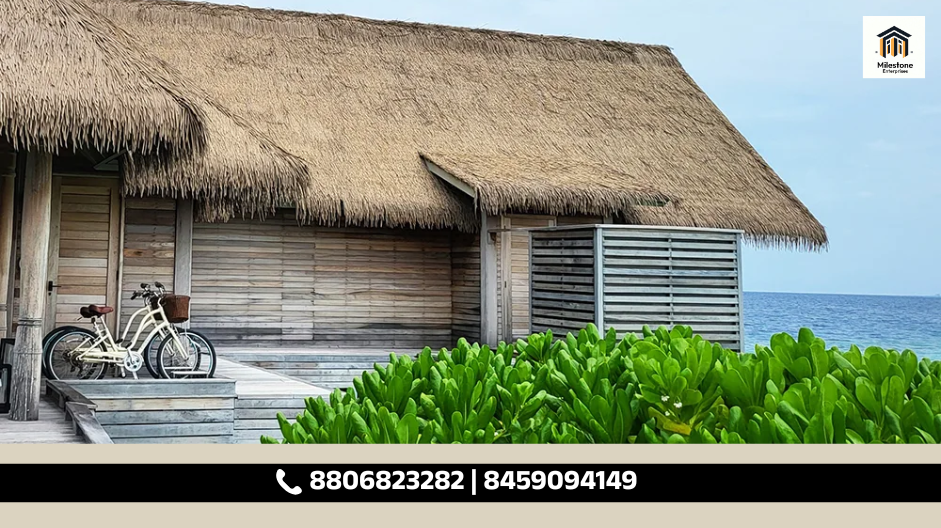
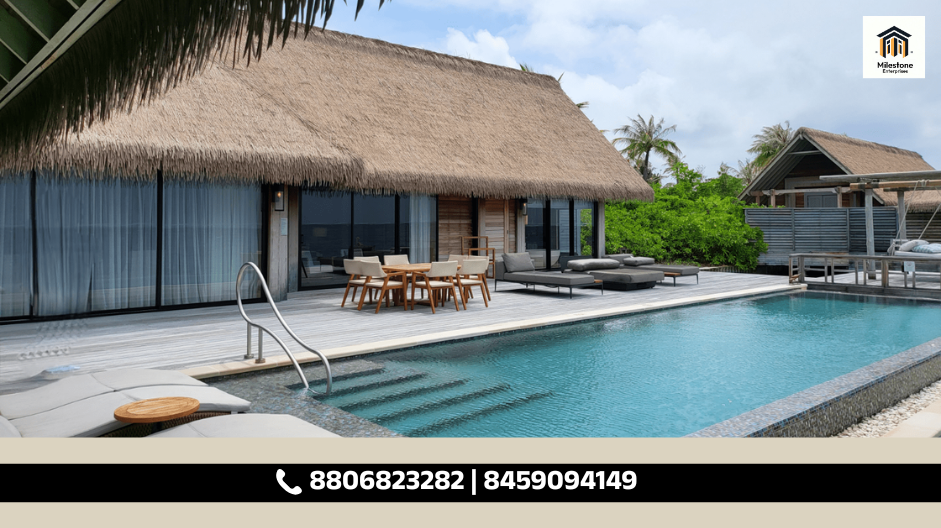
🌤️ Advantages of Synthetic Thatch Roofing
✅ Zero Maintenance – No need for re-thatching, drying, or chemical treatment.
✅ Fire Resistant – Built-in fire-retardant materials enhance safety.
✅ Waterproof & Mold Resistant – Does not absorb moisture or rot.
✅ UV Protected – Does not fade or become brittle under sunlight.
✅ Lightweight – Easy to handle and install.
✅ Eco-Friendly – 100% recyclable and reusable.
✅ Aesthetic Appeal – Realistic tropical and rustic look.
✅ Pest Proof – Impervious to insects, birds, and rodents.
⏳ Lifespan & Durability
- Average Lifespan: 25–50 years (depending on material grade).
- No decay or color fading even under harsh UV exposure.
- Can withstand wind speeds up to 180 km/h (depending on structure).
🪪 Warranty
- Standard Manufacturer Warranty: 10 – 15 years (against fading, cracking, and corrosion).
- Fire-retardant certification: Available for premium grades.
- No annual maintenance warranty needed (unlike natural thatch).

🧹 Maintenance Requirements
- Practically maintenance-free.
- Occasional cleaning with water or air blower to remove dust or leaves.
- No need for re-coating, spraying, or pest control.
🧰 Installation Process
- Roof Framework
- A wooden, metal, or bamboo frame is prepared to support the synthetic thatch panels or strips.
- Can be installed on both new and existing roofs.
- Fixing the Thatch
- Synthetic thatch is supplied in panels, strips, or mats.
- These are fixed from bottom to top of the roof using screws, clips, or fasteners.
- Overlapping Layers
- Each layer overlaps the previous one (similar to natural thatch) to ensure complete water shedding.
- Ridge Installation
- The top ridge is covered with ridge caps or extra thatch panels for waterproofing.
- Final Touch
- Once installed, no coating or treatment is required — it’s ready for long-term use.
⏱️ Installation Time:
- 40–60% faster than natural thatch.
- Small gazebo: 1–2 days
- Large roof: 5–7 days